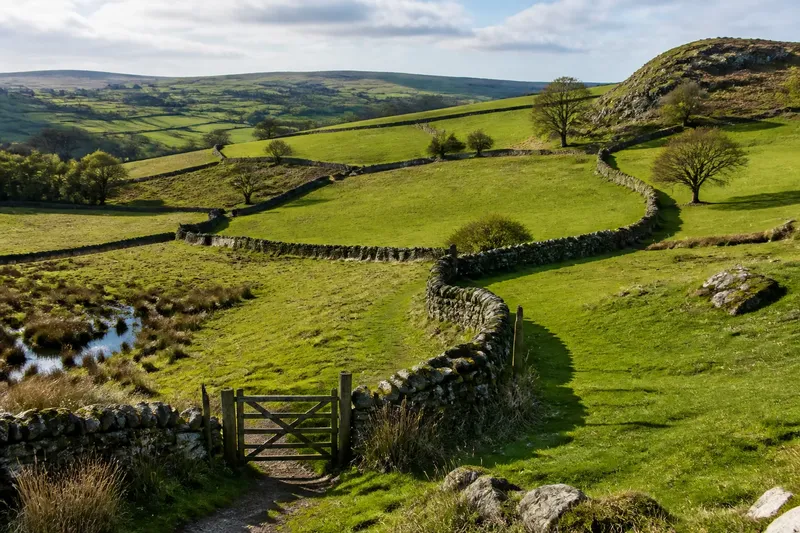
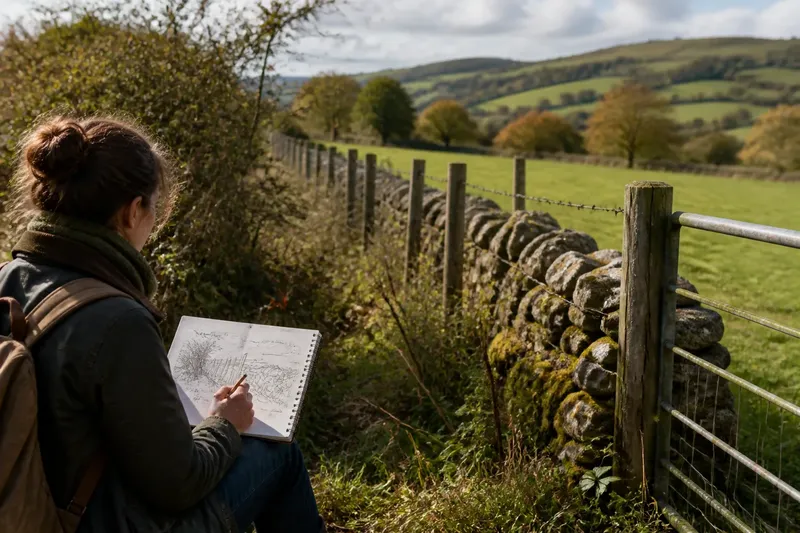
Before the Printed Almanac, the Year Had Its Signs
Before the printed almanac, rural year signs linked birds, plants, soil, and customs to local change, helping people decide what to check before work.
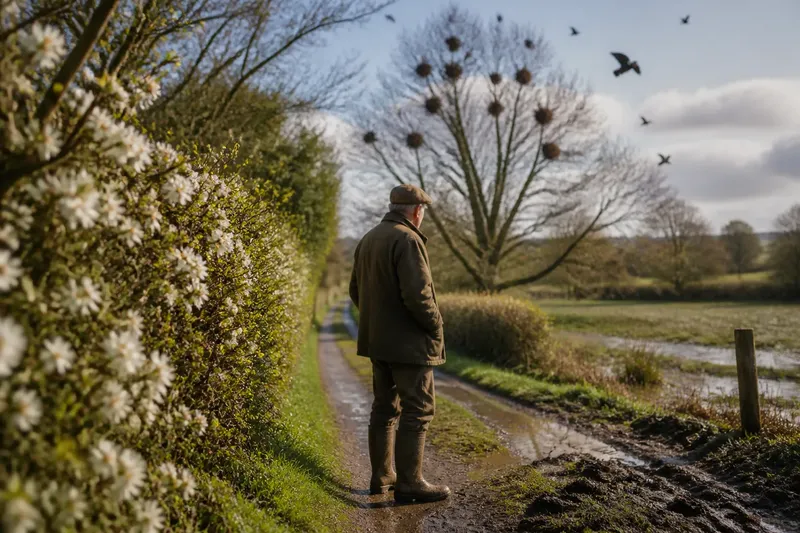
A rookery grows noisy above the lane as a farmer pauses to see whether the ground will take a boot without clinging. Before printed almanacs became familiar household references, rural year signs like these helped people read seasonal change. They were not a tidy calendar, but observations shared and remembered as clues about what might come next.
What counted as a sign of the rural year?
A sign was something observable that tended to recur: a bird’s return, a tree’s first leaves, a particular feel in the soil, or the arrival of a customary task. It did not promise a precise date. It helped people notice that conditions were shifting and compare this season with others they remembered.
Many signs were local. A marsh, a sheltered valley, and an exposed upland could show different signals at the same time. People learned the places close to home, where a hedge’s first blossom or a stream’s behavior could mean more than a general rule carried from elsewhere.
Think of these signs as marks on a kitchen wall: useful for seeing change, but not a machine that predicts exactly what happens next. The knowledge lived in attention and conversation. Someone might point out that a familiar bird had returned, then add that the field was still too wet for a particular job.
Which natural clues did people watch?
Plants offered visible progress. Buds swelling on a hedgerow, leaves opening, flowers appearing in a meadow, and fruit setting each gave a different impression of the season. The order mattered as much as any single sight. A plant could flower early in a warm corner and remain absent on a windy slope.
Birds and insects supplied another kind of cue. Their calls, nesting activity, or presence in a familiar place could make a change feel unmistakable. Yet observers distinguished a local pattern from a dependable signal: a bird might arrive while cold weather lingered, and one warm afternoon did not mean the season had settled.
People also read the ground and water. Soil that crumbled rather than smeared, a lane drying after rain, or a ditch carrying less water could suggest a change in working conditions. These observations mattered because they connected weather to action, but they differed from one field or parish to another.
How did customs give the seasons a rhythm?
Seasonal customs made recurring work memorable. A community might associate a certain part of the year with moving livestock, gathering a crop, tending a shared space, or preparing for a local gathering. The custom did more than mark time: it brought neighbors together around tasks whose timing depended on weather, land, and habit.
Some observances followed religious or local calendars, while others grew from the practical sequence of work. Their timing could vary, and the custom itself might survive even as the task changed. A familiar meal, song, or gathering could preserve a seasonal memory after its original purpose had faded.
Say a household expects to cut a meadow after a customary local gathering. The invented situation starts with soft ground and plants that are not ready. The household postpones the work, explains the conditions, and keeps the gathering as a marker in the year; the observable result is a shared reference point, not a command to act on one date.
How can you read seasonal signs without turning them into rules?
Keep each observation close to its place and conditions. “The first blossom on the sheltered lane” says more than “spring has begun,” because it records where the clue appeared and leaves room for other parts of the landscape to differ.
- Check whether the observation includes an exact place, such as a sunny bank, wet hollow, or streamside path. If it does, compare that same place on another visit; if it does not, add the location before drawing a local comparison.
- Check whether the note describes what you saw or heard. If it records a visible change, keep it as an observation; if it claims a prediction, rewrite it to separate the clue from the guess.
- Check whether the same location has been visited more than once. If it has, compare the recurring details; if it has not, return before treating one sighting as a local pattern.
- Check whether an older neighbor’s expression has a clear local meaning. If its referent is clear, record that meaning with the place; if people use it differently, note the variation instead of choosing one version as universal.
- Check whether a natural observation has been separated from the task or custom associated with it. If the two are distinct, record both; if they have been merged, note the actual ground or plant condition before deciding whether the task fits.
- Check whether a saying still matches the place and practice being discussed. If it does, treat it as a useful local cue; if habitats or customs have changed, keep the saying as cultural memory and look for current conditions separately.
Imagine you are keeping notes on a sheltered lane and a nearby wet hollow. On your first visit, you see blossom on the lane but find the hollow’s soil smearing underfoot; you record both locations and observations without calling either a work signal. On a later visit, the lane has more open flowers and the hollow’s surface crumbles rather than smears. You compare the same places, note that their conditions have changed at different rates, and decide that the hollow still needs a separate check before any field task. The resulting record is specific enough to guide the next observation without turning blossom into a fixed date.
What questions help make sense of old seasonal signs?
Did people use the same signs everywhere?
No. A cue depended on local plants, wildlife, elevation, exposure, and customary work. A sign familiar in one district might be absent or arrive at a different point elsewhere.
Could a seasonal sign predict the weather?
It could suggest a pattern people had noticed, but it was not a certain forecast. A natural cue might appear before conditions were suitable for fieldwork, so people still judged the actual ground and sky.
Why do some old sayings name a bird or flower?
A memorable species made a seasonal change easy to discuss and pass on. The saying may preserve a local observation, though its meaning can shift when habitats or familiar practices change.
How can I use these signs today?
Observe a small set of familiar places and record recurring changes in plain language. Treat the notes as local context, not instructions; for any practical task, consider current conditions and relevant guidance.
What survives when the almanac becomes familiar?
Printed almanacs offered shared reference points, but they did not erase the value of looking closely. A general calendar can name a season; a walk through a particular lane can show whether buds have opened there, whether the soil is workable, or whether a customary task still fits the conditions.
That distinction keeps old rural year signs useful without pretending they form a precise forecast. A local seasonal record can still be made by noting what changes, where it changes, and which customs give those observations meaning. When a sign points toward a task, check the place itself before acting: the landscape may be telling a more specific story than the calendar.