The Place-Name Shortcut That Misleads
A familiar place name can suggest an origin, but not prove it. Learn how to weigh local speech, old spellings, and landscape clues before settling on a story.
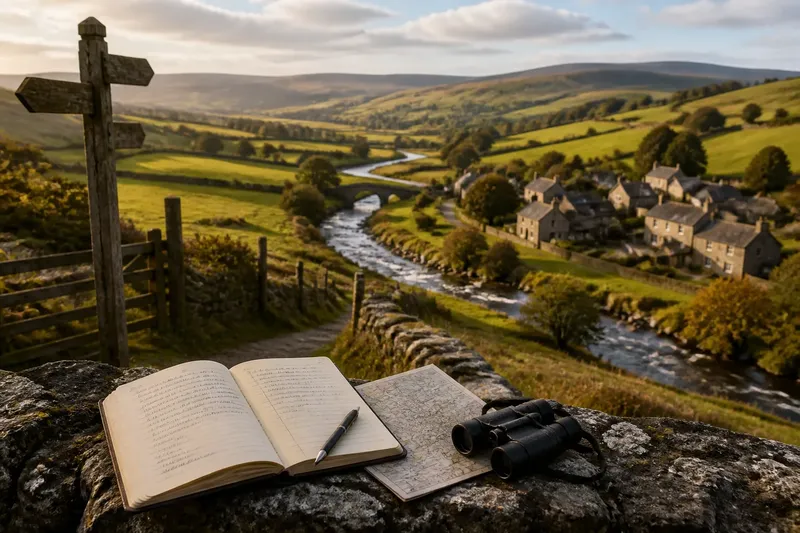
You hear a village called Millbrook and picture a mill beside a stream. That may be right. It may also be a neat story built from two familiar words, while the name’s older form points somewhere else. A place-name shortcut is useful for noticing clues, but it can mislead when a plausible meaning is mistaken for a complete history.
The sensible move is not to dismiss the obvious reading or rush to defend it. Treat it as one possibility, then ask what kind of evidence would support it and what else could account for the name. The right approach depends on whether you are curious during a walk, recording family knowledge, or trying to make a firmer local-history claim.
Are you simply curious about a name on a sign?
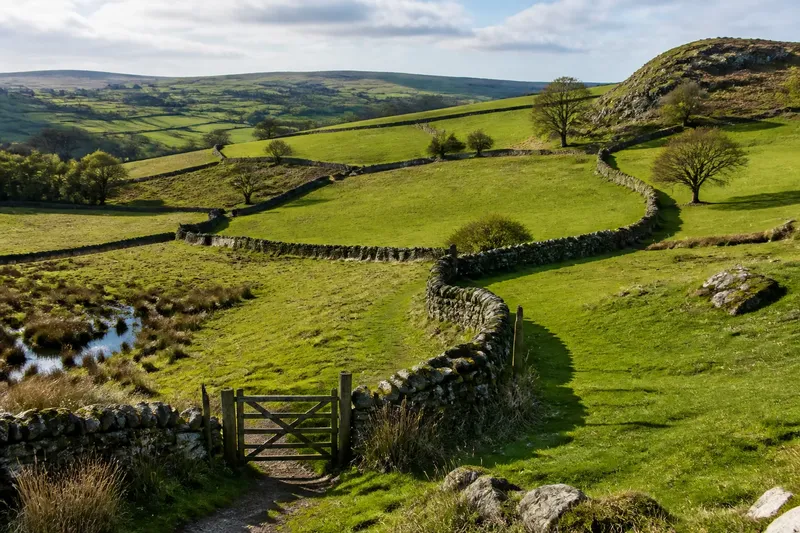
If your interest begins with a roadside sign, map label, or walking route, start with the sound and the place you can actually see. Notice how local speakers pronounce the name. Look for nearby features that might fit its familiar parts: a stream, hill, crossing, old enclosure, or settlement. Write these down as observations, not conclusions.
This is the moment for a light touch. A name that sounds like “Sheep Hill” might invite a story about grazing, but the first task is to record the local pronunciation and check whether the land offers any relevant clue. A similar sound can arise from older words, a changed pronunciation, or a spelling imposed later. The landscape can help you ask better questions; it cannot, on its own, settle the origin.
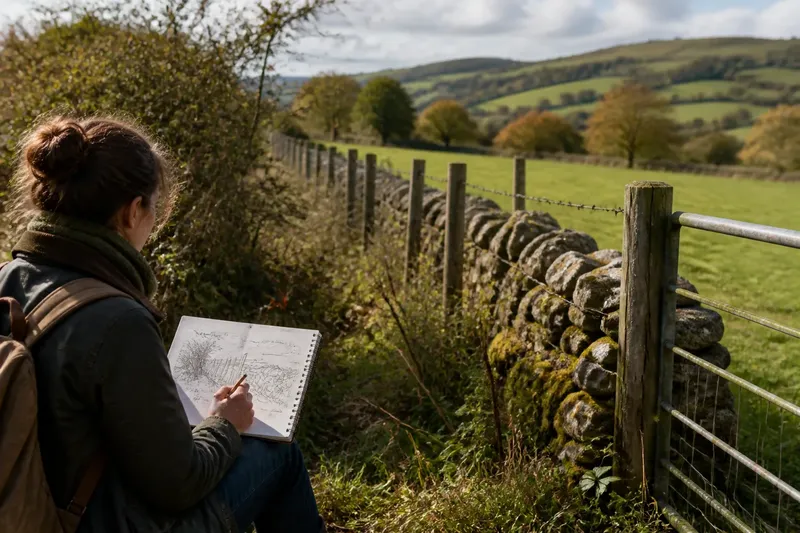
Keep a note in two columns: “what I can observe” and “what I think it might mean.” For example, “the lane rises to a rounded knoll” belongs in the first column; “the name describes the hill” belongs in the second. That small separation prevents an appealing interpretation from quietly turning into a fact.
Are you collecting a story from someone who knows the village?
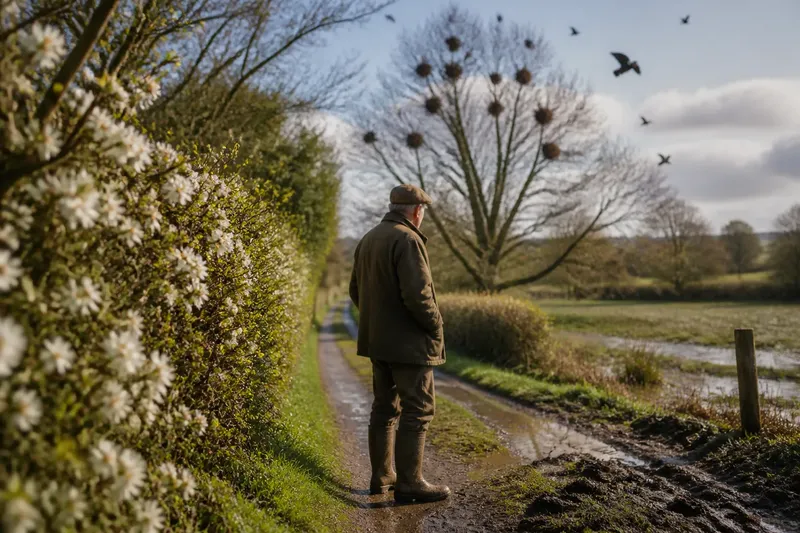
If a neighbor, relative, or longtime resident offers an explanation, preserve the wording and the speaker’s connection to it. Ask whether the story was heard from someone else, remembered from childhood, or tied to a specific feature. These details do not make a recollection more or less valuable; they show what kind of knowledge it represents.
Local speech carries information that a map may miss. It can preserve a pronunciation, a nickname, or the way residents distinguish one place from another. Yet an explanation repeated for generations may be an inherited interpretation rather than a traceable account of how the name formed. Record it respectfully as a local explanation, and leave room for other readings.
Imagine you are told that “Foxford” took its name from foxes crossing a stream. You note the speaker’s exact phrasing, the stream they identify, and whether people still use the name for that spot. Then you mark the fox story as an oral explanation, not a settled etymology. That record keeps the useful local detail without claiming more than the account can establish.
Are you preparing a label, article, or local-history note?
If other people will rely on your wording, move beyond resemblance. Look for older spellings in maps, deeds, parish records, estate papers, or place-name collections where available. The earliest form you can locate may differ sharply from the modern one; that difference can reveal how pronunciation and spelling shifted, or show that the apparent modern meaning is accidental.
Compare forms across time rather than picking the oldest-looking spelling and treating it as a translation. Check whether the name refers to a settlement, a stream, a field, or a larger district, since names can migrate from one feature to another. Ask whether the proposed meaning fits the grammar and sound changes expected in the relevant language, not just the present-day English words.
Local context matters, too. A name containing a familiar element might reflect an older language, a personal name, a land-use term, or a feature that has disappeared. The surrounding names may offer useful comparisons, especially if they share an element or occur in a pattern. Still, one neighboring name is not a decoder ring; each name has its own record.
Where a reliable specialist source offers a cautious interpretation, attribute that interpretation and retain its uncertainty. If the evidence is thin, say so plainly: “The name has been linked to a stream crossing, though the surviving spellings do not settle the origin.” Clear qualification is more informative than presenting a tidy answer as fact.
Does the familiar meaning survive a closer check?
Use this decision guide to choose what to say:
- You have only a modern spelling. Call the familiar reading a possibility, not an origin. Present-day spelling is a starting point, not proof of an older meaning.
- You have a local explanation but no documentary trail. Record it as local tradition and identify whose account it is, if they are comfortable being named. Do not turn it into a verified etymology.
- You have several historical spellings. Compare their sequence and look for a plausible path to the current form. If the forms resist a single explanation, report the alternatives.
- You have a strong landscape match but uncertain word history. Describe the match as supporting context, not confirmation. A stream or hill can fit a story without proving that the name refers to it.
- You have conflicting interpretations. State the disagreement and the evidence each interpretation uses. If you cannot assess that evidence, avoid choosing a winner merely because one sounds more familiar.
- You need a short public caption. Use a compact, qualified sentence rather than forcing certainty: “The name may refer to the nearby brook, though older forms leave its origin open.”
For official spellings, archival interpretation, or a claim that will be used in formal research, follow the relevant archive’s guidance and consult a qualified place-name specialist where needed. The key decision is proportionality: the confidence of the wording should match the strength of the evidence.
What questions help keep the possibilities open?
Can a place name really change its meaning over time?
Its spelling and pronunciation can shift, and a name can transfer from one feature to another. A modern form may therefore resemble familiar words without preserving the original sense in a transparent way.
Does a matching hill, stream, or old building prove the name’s origin?
No; it makes one interpretation worth considering. The feature may be unrelated, may have acquired its name later, or may fit more than one possible reading.
Should I trust the earliest spelling I can find?
It is valuable evidence, but it may be a clerk’s rendering, a copy, or one form among several. Compare it with other records and consider how the name was spoken and used.
What if no explanation can be confirmed?
Say that the origin remains uncertain and preserve the leading possibilities with their supporting clues. An open question is a more accurate result than a confident guess.
How can you write uncertainty without sounding evasive?
Choose verbs that show the status of a claim. “Means” asserts a settled definition; “may derive from,” “has been interpreted as,” and “local tradition connects it with” distinguish possibility, scholarly interpretation, and community memory. Those phrases are not hedges for their own sake. They tell a reader what kind of evidence sits behind the sentence.
Be specific about the uncertainty. Instead of saying only “the origin is unclear,” explain whether the difficulty lies in missing early forms, competing language roots, a changed landscape, or disagreement between sources. A reader can then see what is known and what remains open.
When a place-name shortcut seems to fit, keep it in view—but do not let it close the inquiry. A familiar reading is a useful first question, much like a key placed beside several doors: it shows what might open, not which door it belongs to. Let the name’s recorded forms, local pronunciation, and setting each contribute their own clue, and give the final account only as much certainty as those clues can carry.