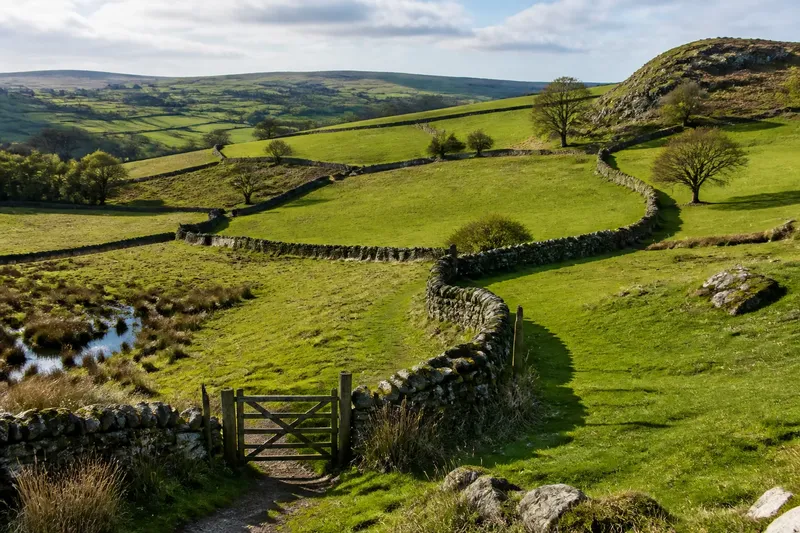
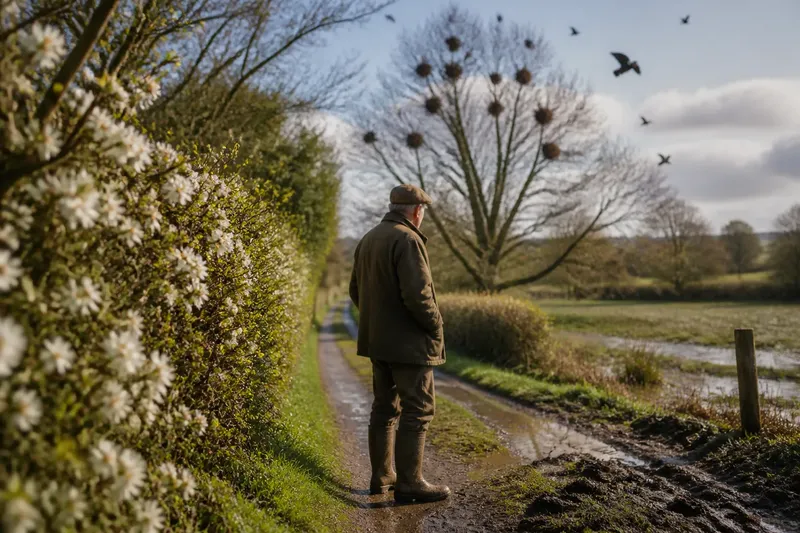
A Late-Autumn Walk for Reading the Field Edges
A late-autumn walk for reading field edges helps you notice how fallen leaves, bare branches, and changing views reshape a familiar countryside route.
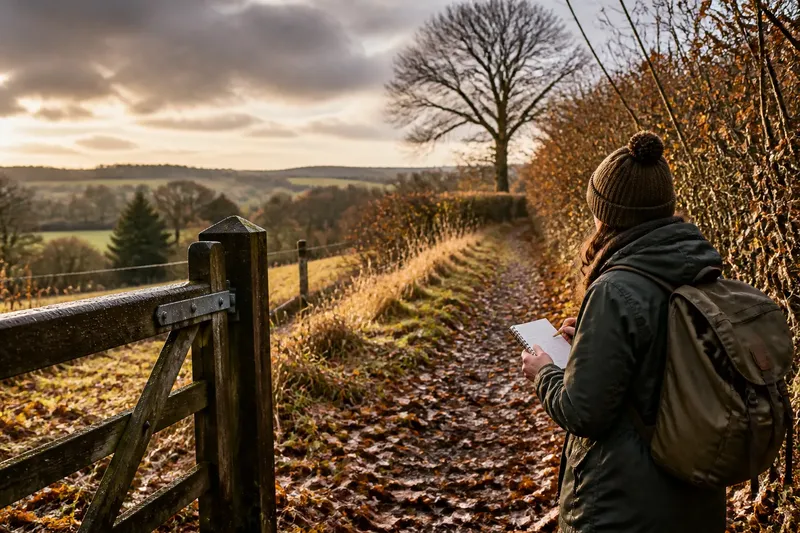
Rain beads on the gate as you pause beside a field path. A familiar hedge looks different now: fallen leaves expose its lower branches, and a strip of pale grass catches the light. A late-autumn walk for reading field edges is less about explaining the land than noticing how the season changes what you can see.
Think of the walk as watching a stage set change between scenes: the scenery stays put, but the view shifts with the angle and the light. Keep to a permitted route, let the weather set the pace, and make notes about the seasonal details in front of you.
What does late autumn bring into view?
With many leaves down, the outline of a hedge or tree belt may become easier to see. Branches that were hidden in summer can reveal a gap, a low stretch, or a mature tree standing within the boundary. Fallen leaves may also make the path’s small rises and dips more apparent.
Other signs are seasonal rather than permanent. Bracken may lie flattened, grasses can lean after wind and rain, and some shrubs keep their leaves while nearby plants stand bare. Notice these contrasts as part of the day’s appearance, not as proof of a boundary’s age or purpose.
Choose a public footpath or another clearly permitted route beside fields. Check access information and local signs before setting out, and avoid a route that becomes unsuitable in wet weather. A short out-and-back walk can offer plenty to notice without turning the outing into a survey.
How can you prepare for a simple observation walk?
Wear weather-appropriate layers and sturdy shoes. A charged phone can help with navigation; a pocket notebook and pencil, or a note-taking app, are useful if you want to remember particular views. You do not need to touch or collect anything.
Look at a map before leaving so you know where the path runs and where you can turn back. Treat it as a way to keep your bearings, not as a promise that every hedge, gate, or path condition will match the page. Pick one focus for the walk, such as how the view changes when a hedge opens or thickens.
Which seasonal changes are worth noticing?
Start with what has changed since the leafy months. Do bare branches make a hedge look narrower, or reveal a tree that was hard to see before? Does a gap appear more clearly against the sky? Keep the description tied to the view: “bare branches above a low, leafy base” says what you saw without assigning a cause.
Then notice the ground and the light. A damp path may show shallow hollows more clearly, while a low winter sun can make one side of a bank stand out and leave the other in shadow. Those effects can change along the same walk, so a detail may look different when you return or view it from the other direction.
Say you reach a gate where the path turns and a bare tree comes into view above the hedge. You pause on the path, write “tree visible after gate; branches bare,” and carry on without approaching the boundary. The note preserves a seasonal observation; it does not claim the tree is new or that the hedge was arranged for a particular reason.
What should you record during the walk?
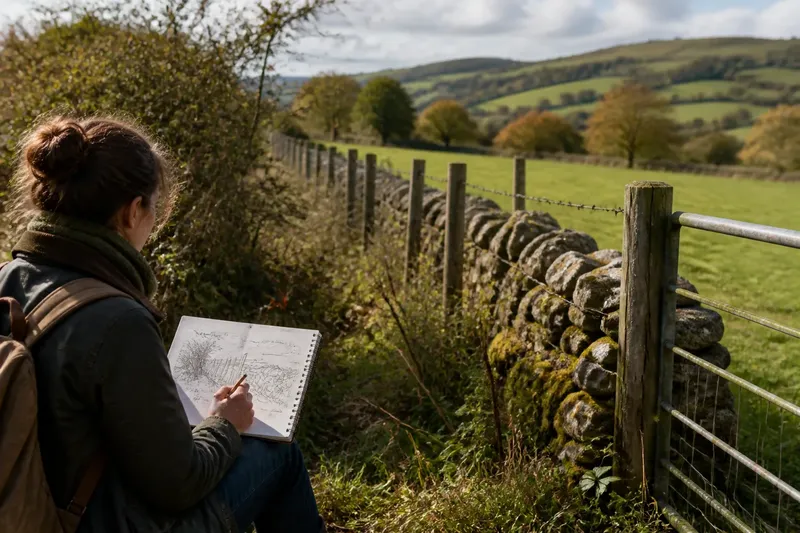
Keep each note brief and attach it to a landmark. A gate, path bend, bridge, or distinctive tree can help you find the same viewpoint again. If a detail is hard to put into words, sketch the outline from where you stand.
- Check whether bare branches reveal a shape hidden by summer leaves; if they do, note the viewpoint and shape, then compare it on a later visit, and if they do not, record that the outline remains obscured.
- Check whether a gap in the hedge is visible from the path; if it is, note what lies beyond without leaving the path, and if it is not, record which part of the view remains screened.
- Check whether fallen leaves make a rise or hollow easier to see; if they do, describe its position relative to a landmark, and if they do not, leave the ground shape unmarked rather than guessing.
- Check whether a tree or shrub still carries leaves while nearby branches are bare; if it does, note the contrast, and if the vegetation is too distant to distinguish, describe the whole stretch instead.
- Check whether rain, wind, or low light limits the view; if it does, switch your notes to path conditions or turn back if footing feels unsafe, and if visibility is clear, continue observing from the permitted route.
- Check whether a sign, closed gate, livestock, or a crowded path changes what is safe or permitted; if it does, follow the posted guidance or take a permitted alternative, and if the route is clear, continue without blocking other walkers.
How can one walk unfold at an easy pace?
Use a few pauses rather than trying to inspect every stretch. The sequence below keeps the focus on seasonal appearance and leaves room to change plans if the ground or weather turns uncomfortable.
- Before setting out: Check the route and forecast, choose a permitted path beside field edges, and note a starting landmark such as a bridge or gate.
- At the first clear view: Describe what the season exposes, such as bare upper branches or a low leafy section. Keep the note observational rather than explanatory.
- At the next landmark: Compare the view with the first one. Note whether the hedge looks more open, the sky shows through, or the ground is harder to see.
- When conditions change: Pause where you will not obstruct the path. If rain or poor footing makes continuing uncomfortable, turn back or use a permitted alternative.
- After the walk: Add a location cue to each useful note and mark any uncertainty as a question. That makes later comparison easier without turning a guess into a fact.
What questions help with seasonal field-edge walks?
Can bare branches make a hedge easier to follow?
They can reveal its outline where summer foliage hid the lower bank or gaps between trees. Some plants keep their leaves, so the view may remain partly screened.
Should I identify every plant I see?
No. For this walk, contrasts such as leafy and bare, dense and open, or high and low are enough. If a plant interests you, note its location from the path and consult a suitable field guide later.
What if the path is set back from the field edge?
Describe the view from the path and leave the boundary undisturbed. Even from a distance, you may be able to notice a break in the skyline or a change in how much of the hedge is visible.
Can one autumn walk explain why a boundary looks different?
It can show what is visible on that day, but not necessarily why it looks that way. Weather, viewpoint, and seasonal growth all affect appearances, so keep explanation separate from observation.
How can you compare the same route later?
Return to a familiar landmark in another season and compare a few specific details: whether leaves hide the lower branches again, whether the same gap remains visible, or whether a tree changes the outline. Describe any difference alongside the conditions, such as a wet path or a different viewing angle. That context helps distinguish seasonal change from a changed viewpoint.
A late-autumn walk for reading field edges is most useful when the notes stay close to what the path reveals. Record the bare branches, the fallen leaves, and the view that opens by the gate; leave the cause unanswered if it is not visible. A later visit can add another seasonal layer without asking one walk to tell the whole story.